Three-Day Gasshuku Highlights Traditional Kata, Bunkai and Dan Grading; Congress Focuses on Preserving Bhutanese Karate Heritage and Expanding International Competition
Naveen Sanchar Correspondent
COLUMBUS, OHIO — November 22, 2026
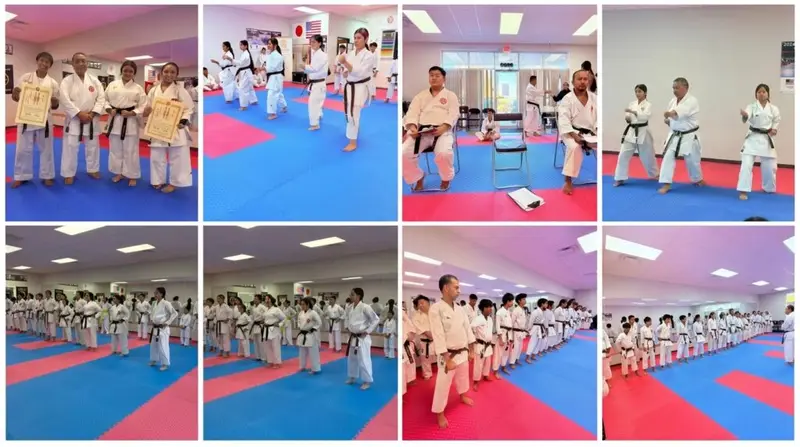
The DRUK SHITO KAI Annual Congress 2026 concluded in the United States on November 21, bringing together more than 40 karate practitioners, instructors, and representatives from various dojos and organizations for discussions on karate development, institutional cooperation, and the preservation of Bhutanese karate heritage.
The annual congress was held alongside a three-day Gasshuku training program conducted from November 20 to 22. Organized by Yoshukan Shito-Ryu Karate and DRUK SHITO KAI, with Ohio Karate Club serving as host, the program combined technical training, Dan grading examinations, organizational discussions, and future planning.
The congress addressed several important issues, including organizational governance, financial transparency, technical leadership, historical documentation, instructor development, and the proposed Druk Online Open Kata Championship.
Among the prominent participants were Shihan T. Rabino, Technical Chief of DRUK SHITO KAI; Coach John Nelson of Midwest Shito-Kai; and Shihan Ran Rai, president and chief instructor of the Druk International Shito-Ryu Karate Association (DISKA).
Other participating DRUK SHITO KAI members included Raj Magar, Tula Dhakal, Moni Rai, Denny Tamang, Bishal Gurung, Bom Magar, Anuj Dhakal, Neeha Adhikari, and Kenjal Dulal, along with representatives from other karate organizations and dojos.
The congress opened with a welcome address by Moni Rai, followed by introductions and formal discussions among participants.
Upcoming Druk Online Open Kata Championship
One of the major topics of the congress was the proposed Druk Online Open Kata Championship.
DRUK SHITO KAI member Raj Magar presented the competition concept, outlining its proposed organizational structure and preparations. Participants discussed competition categories, technical requirements, judging standards, and event management.
The proposed online championship aims to connect karate practitioners across different geographical locations through a common competitive platform. It is expected to provide opportunities for athletes who may face challenges participating in traditional in-person tournaments because of distance and logistical limitations.
Preserving the History of Bhutanese Karate
Preserving and documenting Bhutanese karate history emerged as a significant priority during the congress.
Participants discussed collecting historical information about the origins of karate in Bhutanese refugee camps, its early development, and its subsequent expansion to the United States.
The proposed documentation initiative includes collecting historical photographs, videos, and other archival materials to establish a systematic record of the organization’s journey.
Particular attention was given to the contributions, struggles, and experiences of pioneering instructors who helped establish and develop karate within Bhutanese refugee communities.
Participants emphasized that preserving this history is important not only for the organization but also for educating younger generations about the roots and development of Bhutanese karate.
Shito-Ryu Philosophy and Mabuni Lineage
The congress also included discussions on the historical lineage of Shito-Ryu Karate, founded by Kenwa Mabuni, its philosophy, and its traditional teacher-student relationship.
Participants highlighted the importance of preserving traditional technical knowledge, maintaining historical continuity, and strengthening the connection between generations of karate practitioners.
The technical leadership of Shihan T. Rabino, instructor responsibilities, training systems, and consistent technical standards across affiliated dojos were also included in the discussions.
Three-Day Gasshuku Emphasizes Kata and Bunkai
The three-day Gasshuku, held from November 20 to 22, was conducted under the technical leadership of Shihan T. Rabino.
The training program included separate sessions for junior and senior practitioners, along with advanced technical instruction for experienced karate instructors.
Training covered traditional kata, including Kururunfa, Heian, Tachi, Kosokun Dai, Bassai Dai, Seipai, Nipaipo, Seienchin, and Kosokun Sho.
The sessions emphasized kata precision, proper techniques, technical understanding, and bunkai—the practical interpretation and application of movements contained within traditional kata.
The program was structured according to participants’ age groups and technical levels, allowing practitioners to improve their skills while strengthening their understanding of traditional Shito-Ryu Karate.
Three Practitioners Participate in Dan Grading
Dan grading examinations were another important component of the Gasshuku program.
Amish Rizal represented Ohio Karate Club, while DRUK SHITO KAI members Bom Magar and Bishal Gurung also participated in the examinations.
The grading process provided an opportunity for the practitioners to demonstrate their technical knowledge, discipline, and development within the Shito-Ryu karate system.
New Training Initiatives for the Next Generation
The congress agenda also included proposals to develop summer karate training programs for children.
The proposed initiative aims to encourage younger generations to participate in karate through age-appropriate instruction, technical development, and additional educational activities.
Participants also discussed establishing structured online technical classes for advanced practitioners, with regular training schedules and clearly defined responsibilities for instructors and students.
Organizational Governance and Financial Transparency
Organizational accountability and long-term institutional development were also important areas of discussion.
The congress addressed financial transparency, management responsibilities, technical standards, coordination among affiliated dojos, and strategic planning.
Strengthening communication and cooperation among instructors and organizational representatives was identified as an important step toward improving institutional effectiveness and supporting future programs.
Preserving the Past, Building the Future
The DRUK SHITO KAI Annual Congress and three-day Gasshuku brought together traditional karate training, historical preservation, organizational development, and international cooperation.
From documenting the history of Bhutanese karate and preserving the legacy of pioneering instructors to developing young practitioners and exploring online international competitions, the discussions reflected the organization’s broader vision for the future.
The gathering provided an opportunity for practitioners and leaders to reconnect with their shared heritage while considering new ways to strengthen Shito-Ryu Karate and expand its reach across international communities.