Aadarsha Bikram Singh
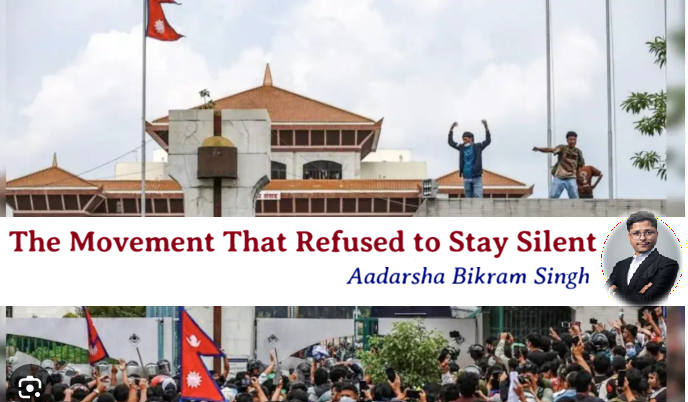
The streets of Nepal once echoed with the energy and determination of Generation-Z. Young people gathered in public squares, marching with slogans, organizing discussions, and speaking or writing to raise questions that had long been ignored. They challenged corruption, nepotism, and unaccountable leadership. They were angry, but they were guided by hope—the hope that the voices of a generation could change the course of a nation.
My own journey with Generation-Z began in much the same way. Years ago, I started working with students and youth across Nepal, conducting public speaking workshops, motivational sessions, and leadership programs. Through these interactions, I witnessed the untapped potential of young people and the courage that comes from knowledge and awareness. I also realized that change requires both voice and action. The streets, the classrooms, and the conversations I facilitated became the foundation for understanding how a generation could influence a nation.
The Generation-Z movement in Nepal was never simply a protest against the government. It represented the aspirations of a generation that had grown up in the age of technology and global awareness. This generation could see the contradictions in society more clearly than any before it. Corruption, inherited privilege, and broken promises were no longer silently tolerated. Young people wanted accountability and transparency—not only in politics but in every structure that shaped their lives.
September 8, the day of the nationwide Gen-Z uprising, was a turning point. The movement had been building for weeks on social media, with young voices spreading messages of hope, anger, and determination. In my own capacity, I helped organize programs in Birendranagar, the capital of Karnali Province. Together with a group of friends who shared the same vision, we planned public gatherings, marches, and discussion forums to engage citizens and amplify the message of change.
The response was overwhelming. Streets filled with young people who were determined to be heard. Our programs evolved in real time, sometimes diverging from the original plan, but always driven by the energy of those participating. Some of us moved to the streets to mobilize communities, while others documented, wrote, and shared updates to inspire more participation. The movement was multifaceted: it was a protest, a dialogue, a learning process, and a call to action all at once.
Through my journey, I understood that activism takes many forms. Some members of Generation-Z chose to enter politics and became candidates, aiming to influence policies from within. Others remained on the streets, continuing to question authority, raise public awareness, and organize forums that reminded leaders of the promises made to citizens. Both approaches were essential. Real change requires engagement both inside and outside political institutions, and the synergy of these paths strengthened the movement overall.
The aftermath of the uprising was a mix of hope and reflection. The country had witnessed the courage of its youth. It had seen organized efforts to hold leaders accountable and demand better governance. And while the streets were now quieter, the movement had left a lasting imprint on the consciousness of the nation.
Fast forward to the recent election: the Rastriya Swatantra Party has secured 182 seats, and Balen Shah is preparing to assume the role of prime minister. For many young people, this moment is historic. It demonstrates that the voices once heard only in protests and on social media are now reaching the halls of power. The ideals of Generation-Z are not confined to slogans—they are entering policymaking and governance.
Yet, even as political victories are celebrated, the movement continues. The streets, classrooms, and online spaces remain active with discussions and initiatives led by young people committed to social change. The work of Generation-Z is far from over, and neither is my own journey. I continue to engage with youth, inspire leadership, and provide platforms for dialogue, ensuring that the energy and ideals of the movement are sustained.
The lessons learned along the way are profound. Activism is not about individual recognition or fame. It is about understanding the needs of society, questioning systems that fail citizens, and striving to create structures that empower the most vulnerable. Leadership is not only about holding office; it is also about taking responsibility and holding others accountable. Civic engagement, whether in classrooms, workshops, social media, or streets, is the cornerstone of a functioning democracy.
Generation-Z has demonstrated that a new Nepal is possible—a Nepal where young voices are not dismissed, where questioning authority is valued, and where the ideals of transparency, equality, and justice guide public action. Participation in politics, activism, education, and public discourse are all essential in transforming this vision into reality.
This is the essence of my journey with Generation-Z: walking alongside a generation that refused to remain silent, learning from the courage and creativity of youth, and taking part in shaping a future that belongs to all citizens. The streets, the ballots, and the conversations are all interconnected. Each moment of engagement strengthens the foundation for a more conscious and accountable society.
The journey does not end with elections. Governments may change, but the responsibility of citizens—and the transformative potential of Generation-Z—remains. The movement that began with questions and marches continues through every discussion, every workshop, and every effort to inspire and engage young people. It is this ongoing journey that shapes not just leaders, but a generation committed to building a better Nepal.
Generation-Z is no longer only a voice in the streets—it is a presence in policymaking, a force in education, and a catalyst for social awareness. My journey is inseparable from theirs: learning, acting, and contributing to a collective vision that strives to transform Nepal into a country where ideals are realized, and voices are heard.
This journey—of walking with Generation-Z, of challenging injustices, of inspiring action—continues. Elections are milestones, not endpoints. And as the new government takes office, the energy, awareness, and courage of a generation will continue to shape the country’s future. The story of Generation-Z is far from over, and neither is the journey to build a Nepal defined by accountability, justice, and hope.